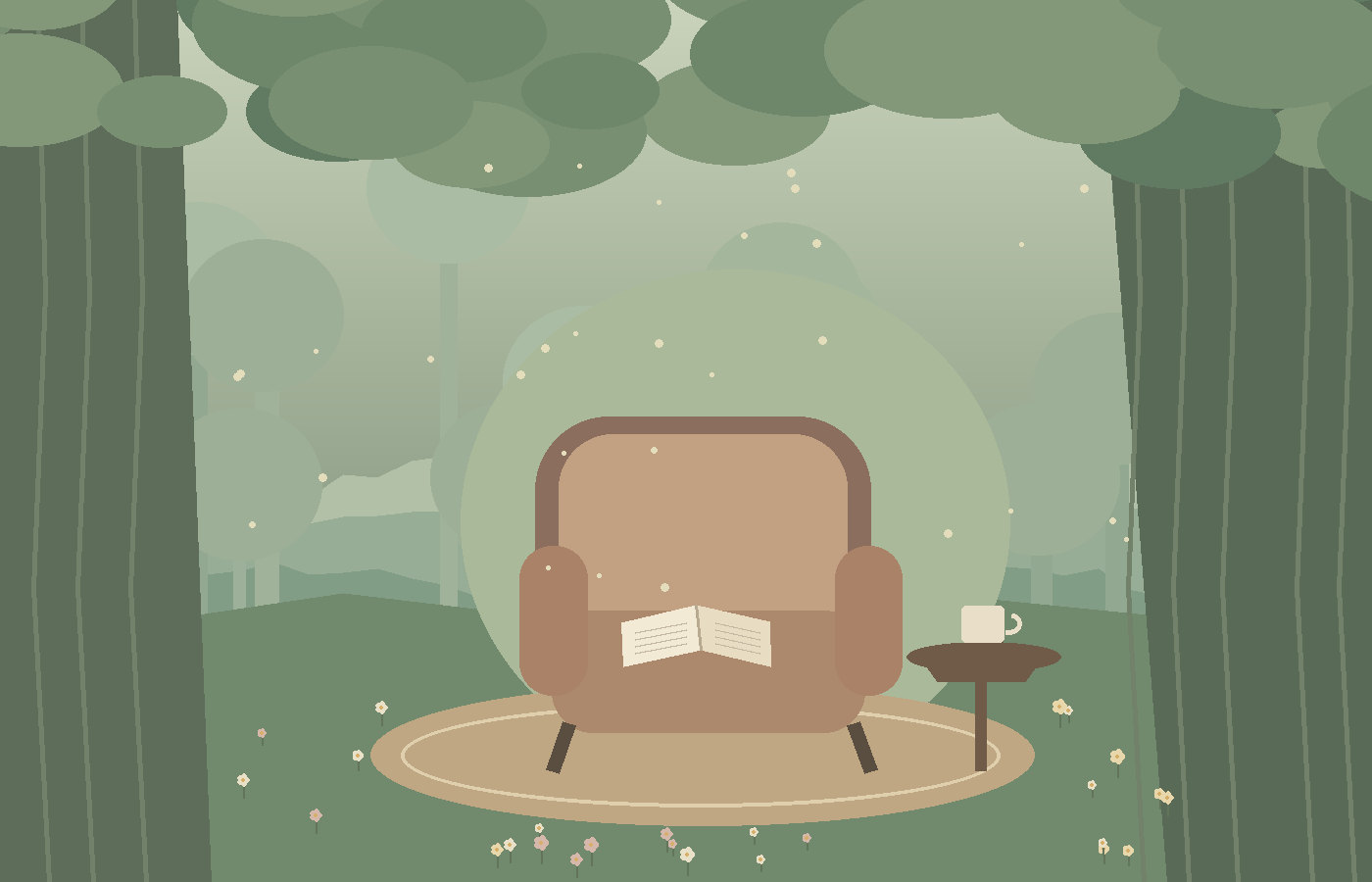
The chair arrived on a Tuesday in the back of a van that smelled of oranges and wet rope. Its upholstery had once been green, perhaps the green of a bottle held to a window, but years had thinned the color to a collection of uncertain shades. One arm was polished almost smooth by the passage of hands. The other bore a crescent-shaped stain, dark at its edges, which looked to Nora like a small country on an old map.
“You’re sure?” asked the driver, who had helped carry it up the stairs and now stood in the doorway of her apartment, breathing through his nose.
“I’m sure.”
“Because my sister said you hadn’t actually seen it.”
“Your sister said it was comfortable.”
“That’s not the same thing.”
He left it beside the radiator, where it sat with the exhausted dignity of a guest who had endured a long journey and did not intend to make conversation. Nora paid him, closed the door, and walked around it. There was a loose thread at the back. A spring gave a small, metallic complaint when she pressed the seat. One wooden foot was shorter than the others, or perhaps the floor was uneven; in her building both explanations were equally likely.
Nora folded cardboard beneath the short foot and sat down. The chair received her with an unexpected give. She fetched the novel she had been carrying for three weeks. At the end of two pages she realized she had read the same sentence four times.
There was a tap at the door. Bea stood outside holding a cushion covered in blue flowers.
“I forgot this. Aunt Esther always used it behind her back.”
Nora invited her in. Bea placed the cushion on the chair, stood back, and smiled with a quickness that surprised them both.
“There you are,” she said, addressing the chair rather than Nora.
Bea explained that Esther had kept it in her bedroom. She read there in the afternoons, with the door nearly closed and a saucer balanced on the windowsill for her teacup. The chair had not been an heirloom. Esther had bought it secondhand after a winter when the pipes burst and a good deal of furniture had to be thrown away. Later, when her knees worsened, she had refused a newer one with a mechanism to lift her upright.
“We all thought she was being difficult,” Bea said. “Sometimes she was. But I think she liked having one place where nobody could improve things for her.”
After Bea left, Nora put the cushion behind her back and tried the book again. She managed seven pages before her phone lit up. A message from her brother asked whether she had found their mother’s insurance papers. Another, sent an hour earlier, asked the same question with a question mark by itself. Nora answered that she would look tonight, although she knew she would begin at once. She put the book face down and went to the hall cupboard.
The papers were in a biscuit tin beneath a heap of scarves. Nora photographed them and sent the pictures. Her brother replied with a thumbs-up. She considered asking how their mother had been that morning, then saw that he had already sent an update to the family group. She read it standing in the hall, with one hand still resting on the open cupboard door.
By the time she returned to the chair, the radiator had gone cold. She closed the novel and carried it to bed, where she read nothing at all.
Over the next few days, Nora moved the chair three times. Beside the window it blocked a drawer. Near the bookcase it faced a patch of wall where a painting had once hung, and the pale rectangle made her think of an absence she ought to remedy. At last she put it in the corner between the bedroom door and the window, angled so she could see neither the kitchen counter nor the pile of unopened mail. She added a lamp with a flexible neck and a small table just large enough for a glass and a book.
It looked, she thought, like an illustration of a person who knew how to spend an evening. She sat down to test it. A neighbor began practicing the trumpet, stopping after every few notes to start the phrase again. Someone in the street argued about a parking space. Her own mind supplied a list of appointments, groceries, and calls she had postponed. The corner was pleasant, but it had no authority over any of these things.
Room for company
On Friday she visited her mother at the rehabilitation center. The room was warm, and the television in the next bed was playing a game show with the sound low. Her mother was awake, wearing a cardigan with one button fastened incorrectly.
“I brought your book,” Nora said.
“Which one?”
Nora took it from her bag. It was a paperback with a cracked spine and a woman in a red coat on the cover. Her mother had asked for it twice on the phone.
“Oh, good. Though I don’t know why I wanted it.” She turned it over in her hands. “I can’t keep hold of the story just now.”
“I could read some to you.”
Her mother made a face. “I’m not five.”
“I know.” Nora put the book on the bedside cabinet. “Sorry.”
They talked about the food, the weather, and a nurse who had a habit of calling everyone darling. Nora straightened the cardigan button. Her mother let her, then undid it again because the room was too hot. At the end of the visit, while Nora was gathering her coat, her mother said, “You can leave it here. I like seeing it.”
That night Nora sat in Esther’s chair with her own book open. She thought of the paperback on the cabinet, doing nothing except being available. She had been treating reading as another appointment she was failing to keep, another obligation that would become easier if only she arranged herself correctly. She set no timer. She left her phone on the table within reach, because her mother might need her and because pretending otherwise made her more anxious, not less.
The novel concerned two sisters preparing a meal for a guest who might not arrive. For several pages one sister searched the kitchen for a particular bowl, opening cupboards with increasing irritation while the other peeled potatoes. The scene was uneventful, and then it wasn’t: the searching sister found the bowl in plain sight and began to cry, not because of the bowl but because her sister had moved it months ago and she had never asked why. Nora read that passage twice. She knew the peculiar embarrassment of being undone by the wrong small thing.
When she looked up, the trumpet had stopped. She had not heard it stop. The glass beside her was empty, and the lamp had made a bright island of the page. She was reluctant to move, but her leg had gone numb, so she stood and walked around the room until feeling returned.
On Sunday Bea knocked again. She had come to borrow a screwdriver and stayed to inspect the chair’s new position. She lowered herself into it without being asked, settled the cushion behind her, and closed her eyes.
“She’d approve of the lamp,” Bea said. “She used to complain that modern lamps were designed by people who didn’t read.”
“Did she read every day?”
“Most days. Sometimes she just sat here and watched the rain.” Bea opened one eye. “Well, not here. In her room.”
She reached between the seat cushion and the arm and pulled out a folded slip of paper. For a moment she held it without opening it. Nora saw that her hand had begun to tremble.
“I thought we’d found everything,” Bea said.
Inside was a shopping list: soap, pears, light bulbs, thread. Beneath it someone had written ask Bea about the blue one.
“Any idea?” Nora asked.
“No.” Bea laughed, then pressed the paper flat on her knee. “It could have been anything.”
She read it again, as if a second look might supply the missing object. Nora wanted to offer a guess—the cushion, a dress, a book—but the list was Bea’s to wonder over. She went to the kitchen and made tea. When she returned, Bea had placed the paper on the table beside the lamp.
“You keep it,” Bea said. “If I take it downstairs, I’ll put it somewhere safe and never see it again.”
Nora slipped it into the novel as a bookmark. For a while they drank their tea in the imperfect quiet. The pipes knocked. A door slammed two floors below. Bea told her about Esther’s habit of lending books with stern instructions not to fold the corners, although Esther herself folded them lavishly. Nora told Bea about her mother’s red-coated woman, waiting on the cabinet.
“Maybe she’ll read it when she’s stronger,” Bea said.
“Maybe.”
“Or maybe she knows the story already.”
Nora had not considered that. Her mother reread books so often that certain covers had become fixtures of the house, like the clock in the hall. Nora had assumed she wanted the paperback for something new to do. It was possible she wanted it because she already knew what happened, because there was comfort in recognizing the shape of an ending.
At her next visit Nora asked. Her mother was sitting up, the book open across her lap.
“I’ve read it three times,” she said. “Perhaps four. The husband is dreadful, and the woman leaves him, and there’s a dog I’m always worried about.”
“Does the dog survive?”
“Of course. I wouldn’t keep reading it otherwise.” She touched the edge of a page. “I can manage a little in the morning. In the afternoon the words seem to wander.”
Nora pulled the visitor’s chair closer. Its plastic seat was hard, and one leg scraped against the floor. She had brought her own novel and, after a moment’s hesitation, took it out. Her mother glanced at the cover.
“Is that a good one?”
“I think so. They’re making dinner, very slowly.”
“Sounds realistic.”
They read for a few minutes. A trolley passed in the corridor. The woman in the next bed spoke into her phone, explaining at length where a spare key could be found. Nora lost her place and found it again. Once, her mother asked her to reach the glass of water; once, Nora asked what the red-coated woman’s name was. Then they returned to their separate pages.
When visiting hours ended, her mother closed the paperback with a finger tucked inside. “Bring yours next time,” she said. “You can tell me if the dinner ever gets made.”
At home, Nora left her coat over the back of a kitchen chair and went straight to the corner. The blue cushion had slipped sideways. She set it upright, switched on the lamp, and sat down with the book. Through the wall came the first hesitant notes of the trumpet. She recognized the phrase now, though she still could not have named it; tonight the player made it farther before beginning again.
Nora found Esther’s list between the pages. She looked once more at the instruction about the blue one, then moved the paper forward to mark where she had stopped. There was room on the table for her phone, her glass, and the small untidy evidence of someone else’s life. She opened the novel. In the kitchen of the story, a pot was beginning to boil, and one of the sisters had finally found a clean spoon.
← Chapter 7: Above the weather | Contents | Chapter 9: The house that listened →